An independent bookstore organizing books by cause and movement, not genre—helping readers discover activist literature with clear context and transparent impact.
ROLE
Solo Brand + Product Designer
TOOLS
Figma
Adobe Illustrator
Claude
WHAT I DESIGNED
Complete visual identity and brand system
Responsive website (mobile and desktop)
Design system connecting brand to product
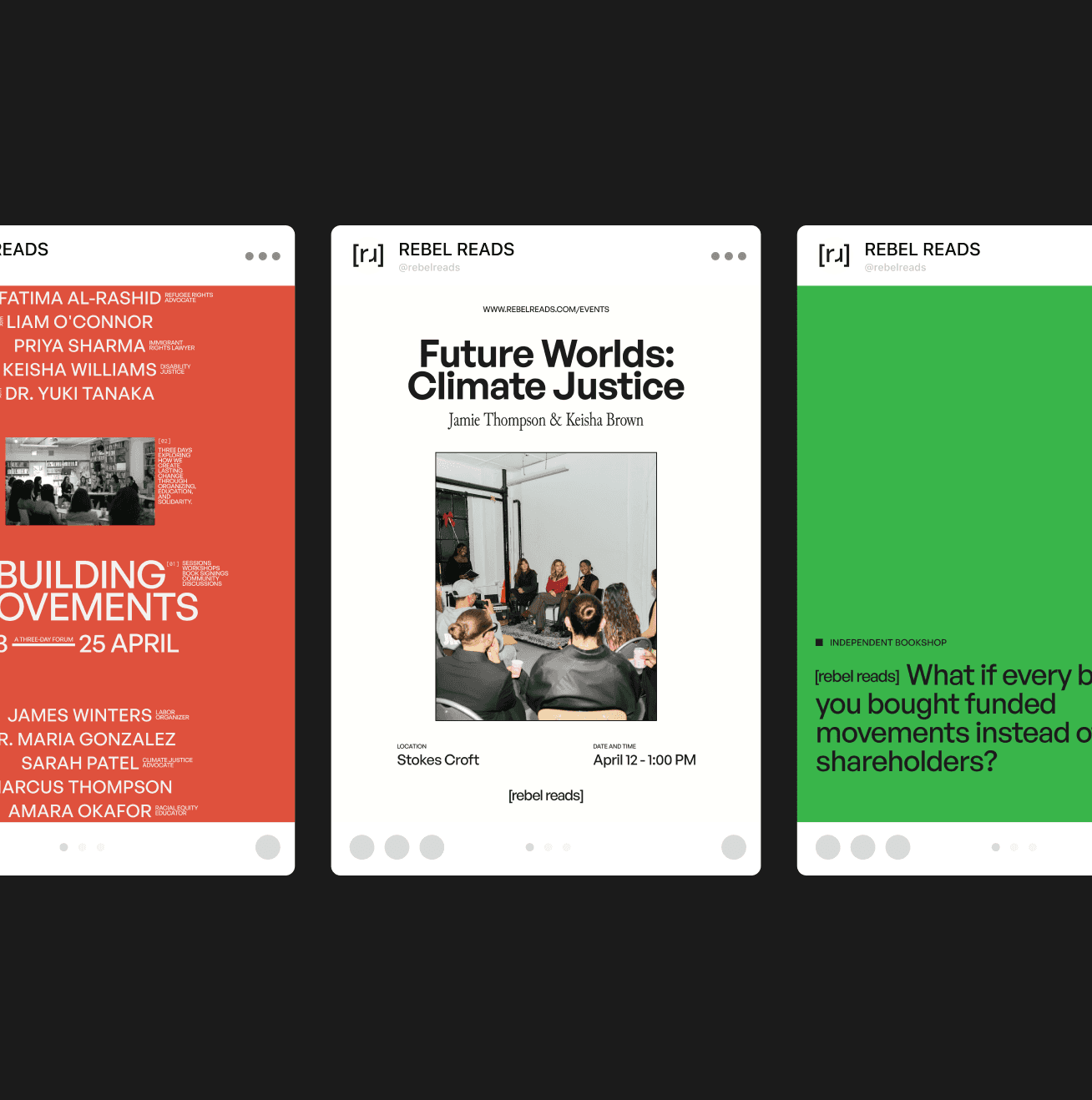
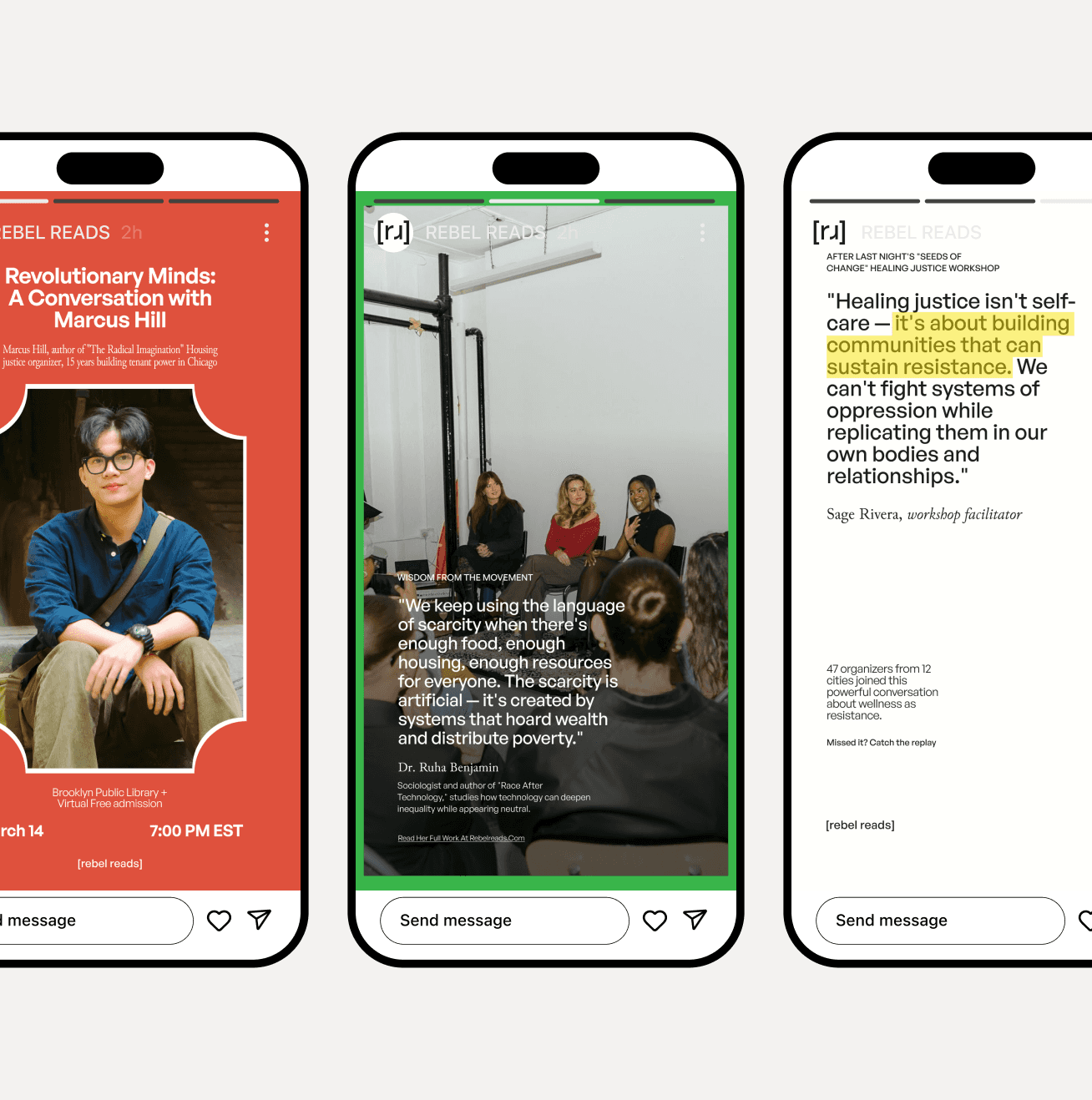
Social media templates
THE QUICK STORY
The Problem
When you're looking for books on social justice topics, you're forced to search through vague categories like "Politics" or "Non-Fiction" with no way to tell which voices are authentic. Publisher descriptions tell you what a book is about, but not why it matters or how it fits into broader movements. And there's no transparency about where your money goes—do authors get fair royalties? Does your purchase support related causes?
My Approach
Cause-Based Navigation
I noticed when I searched for immigration books, I had to dig through "Politics" and "Non-Fiction" and never knew if I'd found the right perspective.
Analyzing existing platforms revealed every bookstore organizes by genre (Fiction, History, Science)—forcing readers to navigate categories designed for general browsing, not mission-driven discovery.
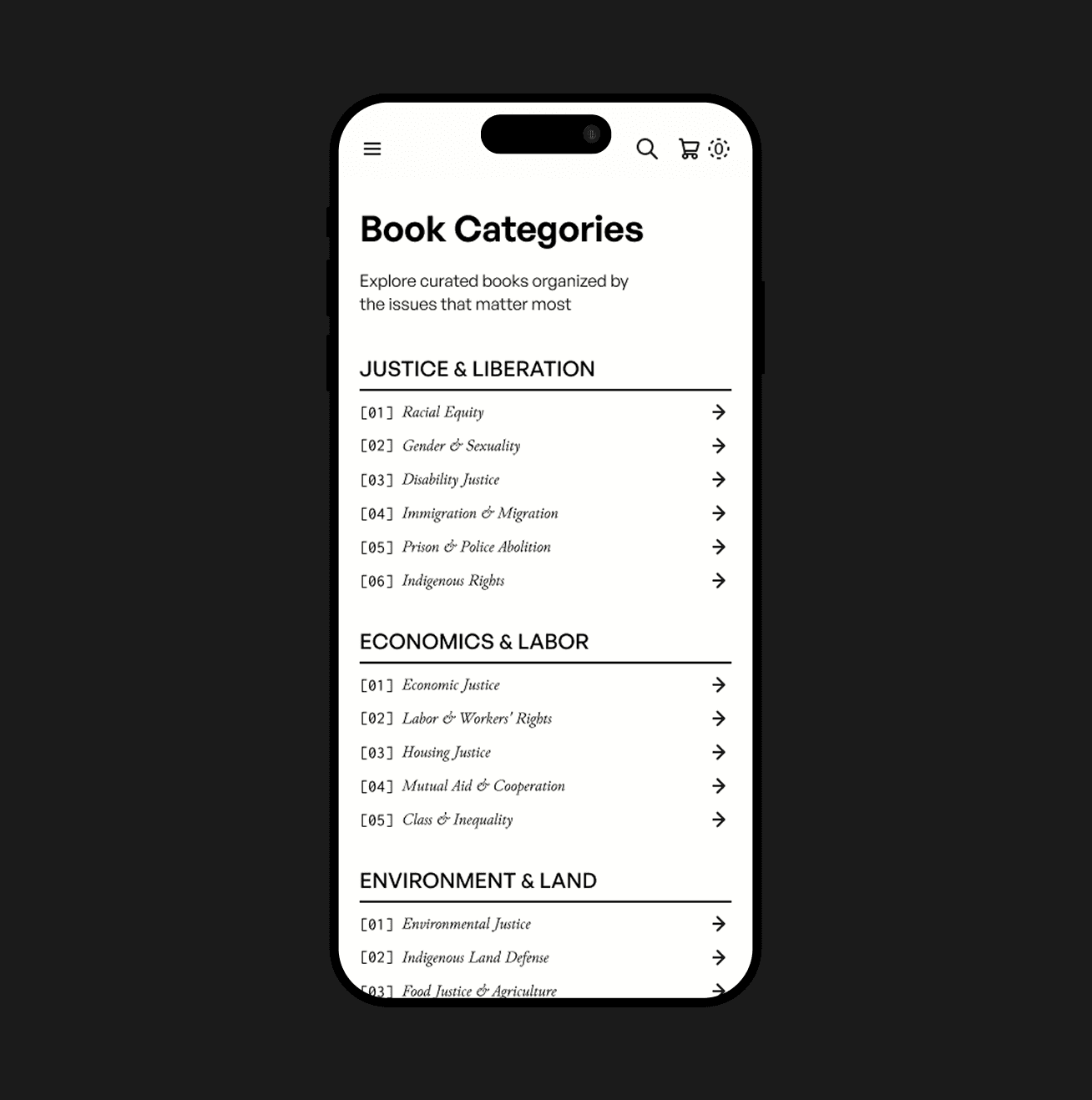
I decided to organize books by cause and movement instead—Abolition, Environmental Justice, Indigenous Voices, Immigration Rights. Readers discover books based on what they care about, not by guessing which genre might have what they need.
I noticed publisher descriptions explain what a book is about, but not why it matters. When looking at books on climate justice, I couldn't tell which was foundational reading or which centered frontline communities.
People spend 30+ minutes cross-referencing sources to answer: "Is this the right book for my knowledge level? Does this author have authentic perspective?"
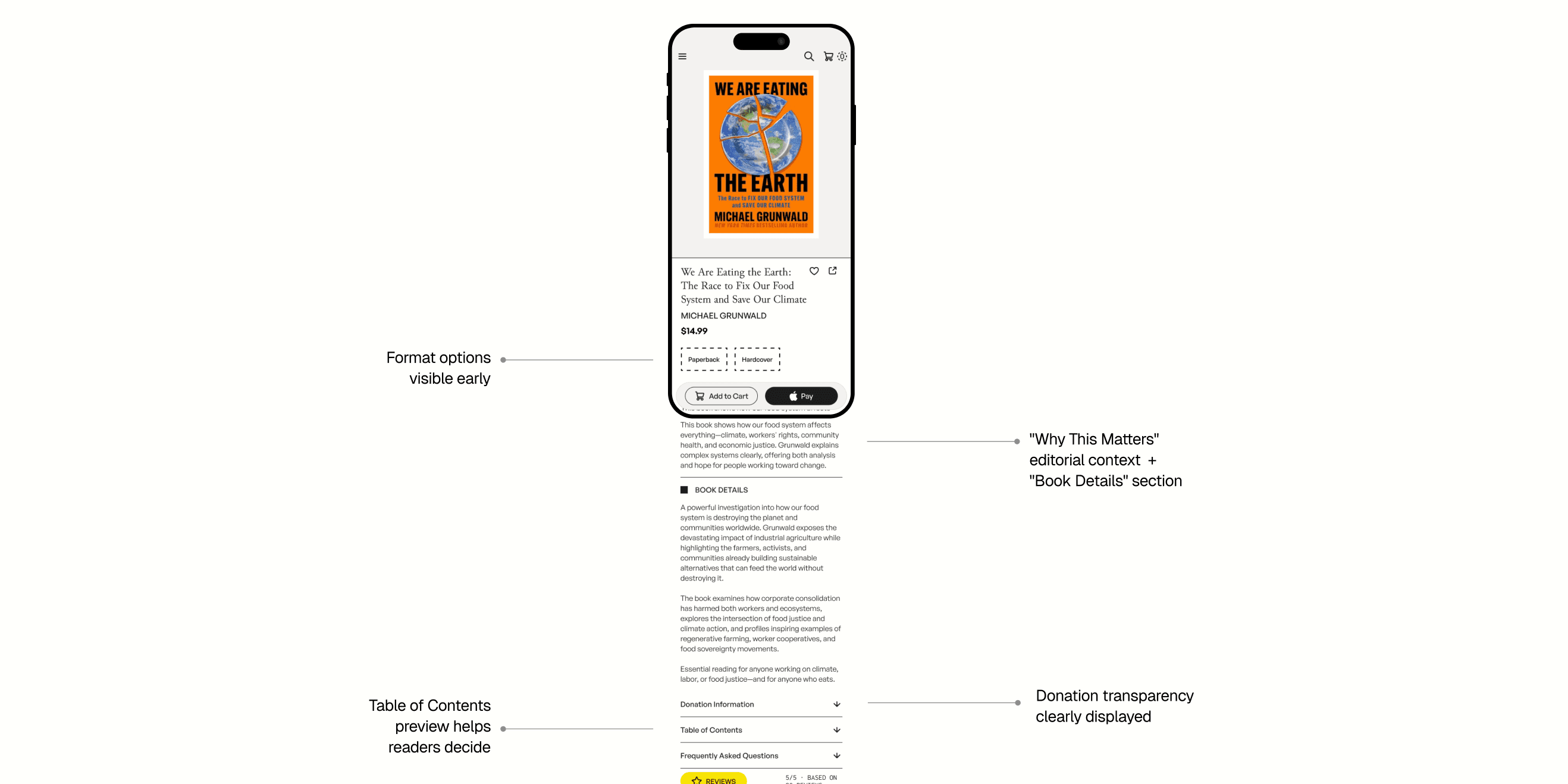
I decided every book page needed a "Why This Matters" section—editorial context explaining the book's significance, who should read it, and how it connects to movements. Not marketing copy, genuine curation that helps readers decide with confidence.
I noticed readers want to support causes through their purchases, but there's no transparency. You don't know if authors get fair royalties or if proceeds support organizations.
Research indicated trust in purchasing decisions requires visible evidence, not marketing claims—users need to see exactly how their money supports causes and which organizations benefit.
I decided to make impact visible: 15% of every purchase goes to partner organizations, shown clearly on each book page. Transparency builds trust and makes every purchase feel meaningful.
The Solution
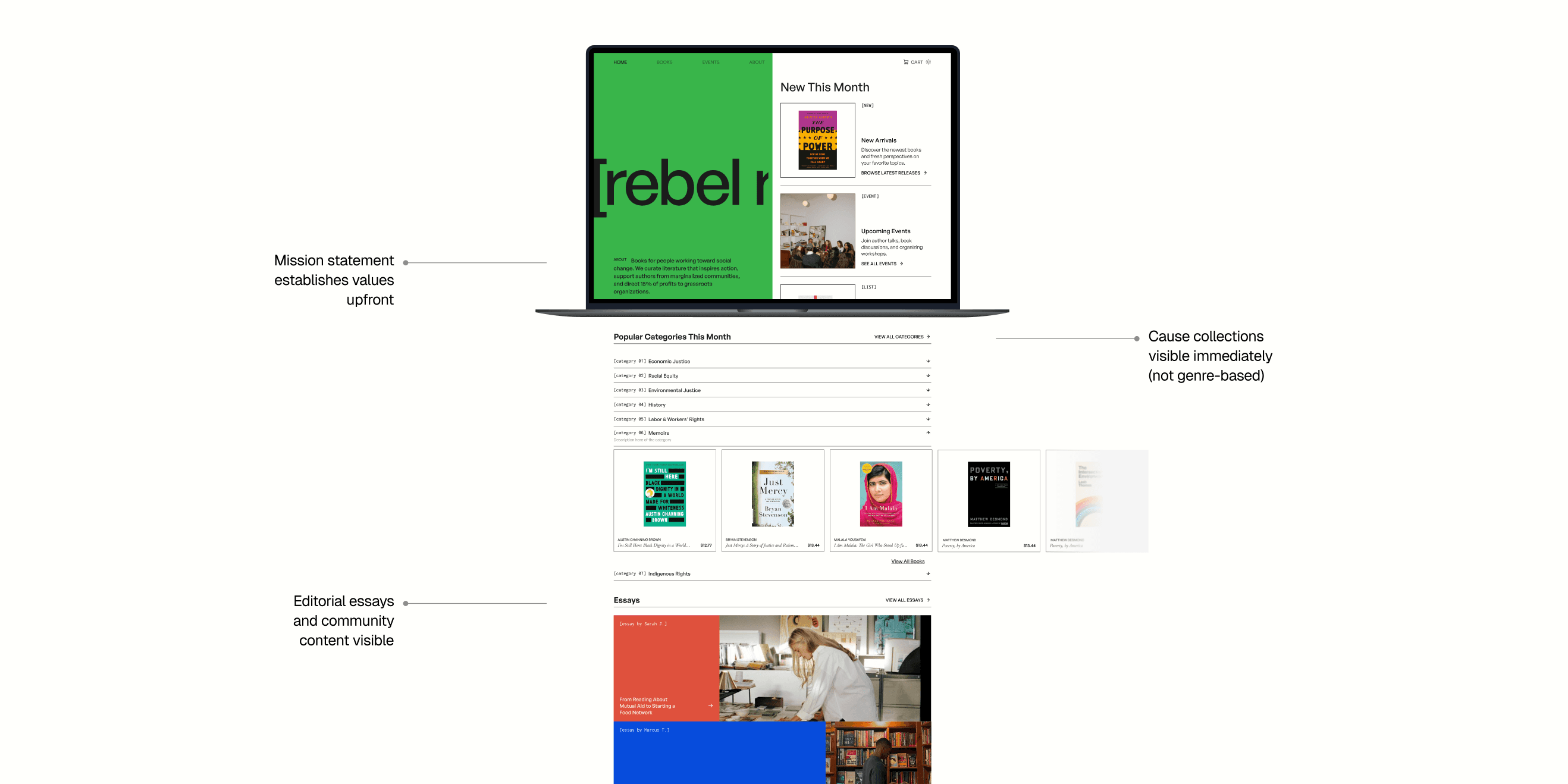
Homepage - Discovery with Purpose
The homepage immediately shows mission and values. Cause-based collections with editorial introductions, staff picks with context, and upcoming events—showing this is a curated bookstore with clear values, not generic e-commerce.
Book Detail Page - Why This Matters
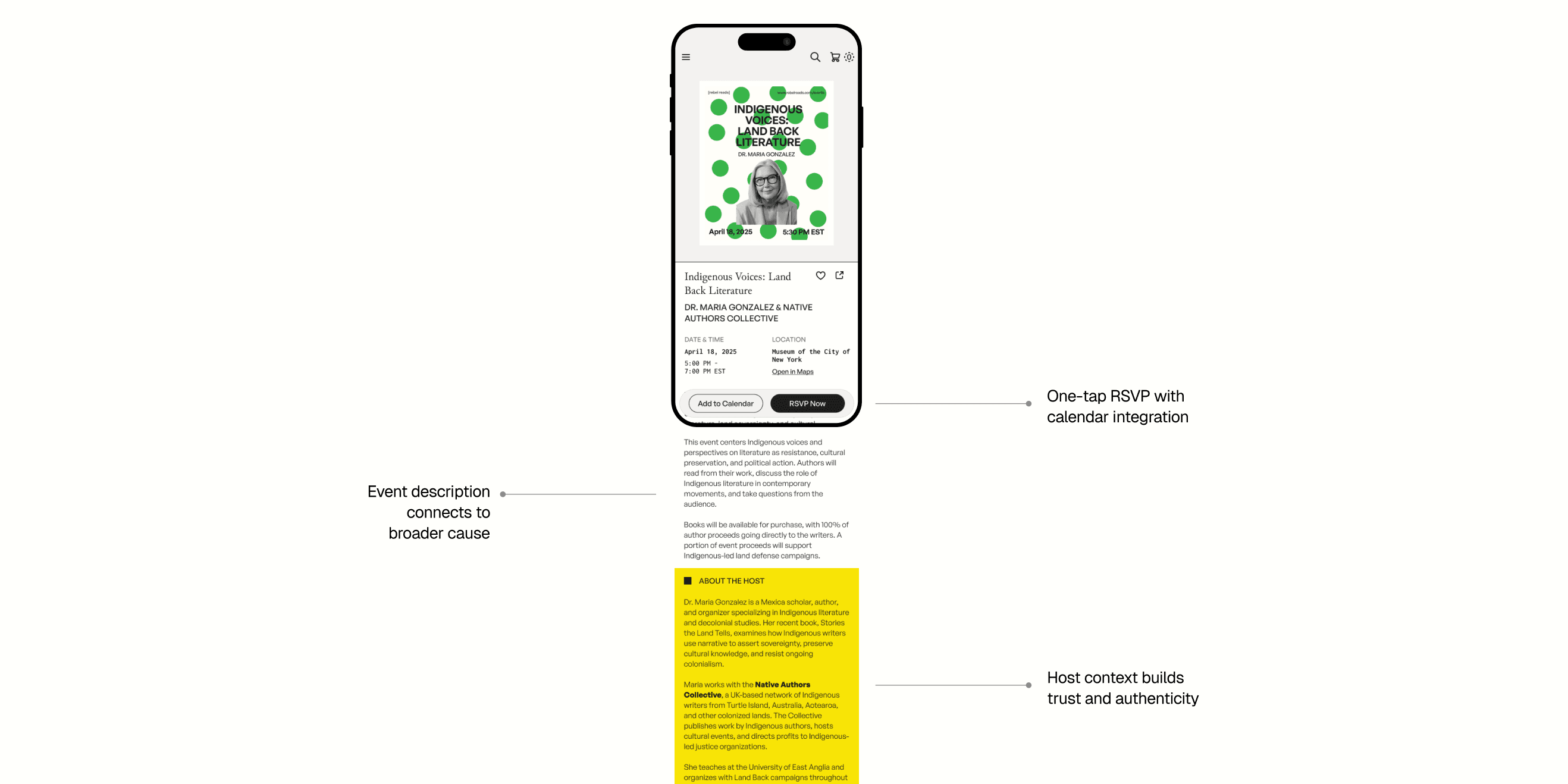
Every book page transforms transactions into understanding. "Why This Matters" editorial explains significance (not just publisher descriptions), transparent donation breakdowns show exactly where money goes, author background explains their perspective, and related events connect directly with one-tap RSVP.
Cause Category Page - Organized by Mission
Browsing by cause shows all formats—theory, memoir, history, poetry—without forcing readers to translate interests into genres. Someone interested in abolition sees everything relevant in one place, with clear editorial context for each collection.
Event Pages - Community Connection
Events, reading circles, and book clubs live alongside book discovery—not separate features, but natural extensions of the experience. Clean RSVP flows with automatic calendar integration turn interest into participation.
Brand Graphics
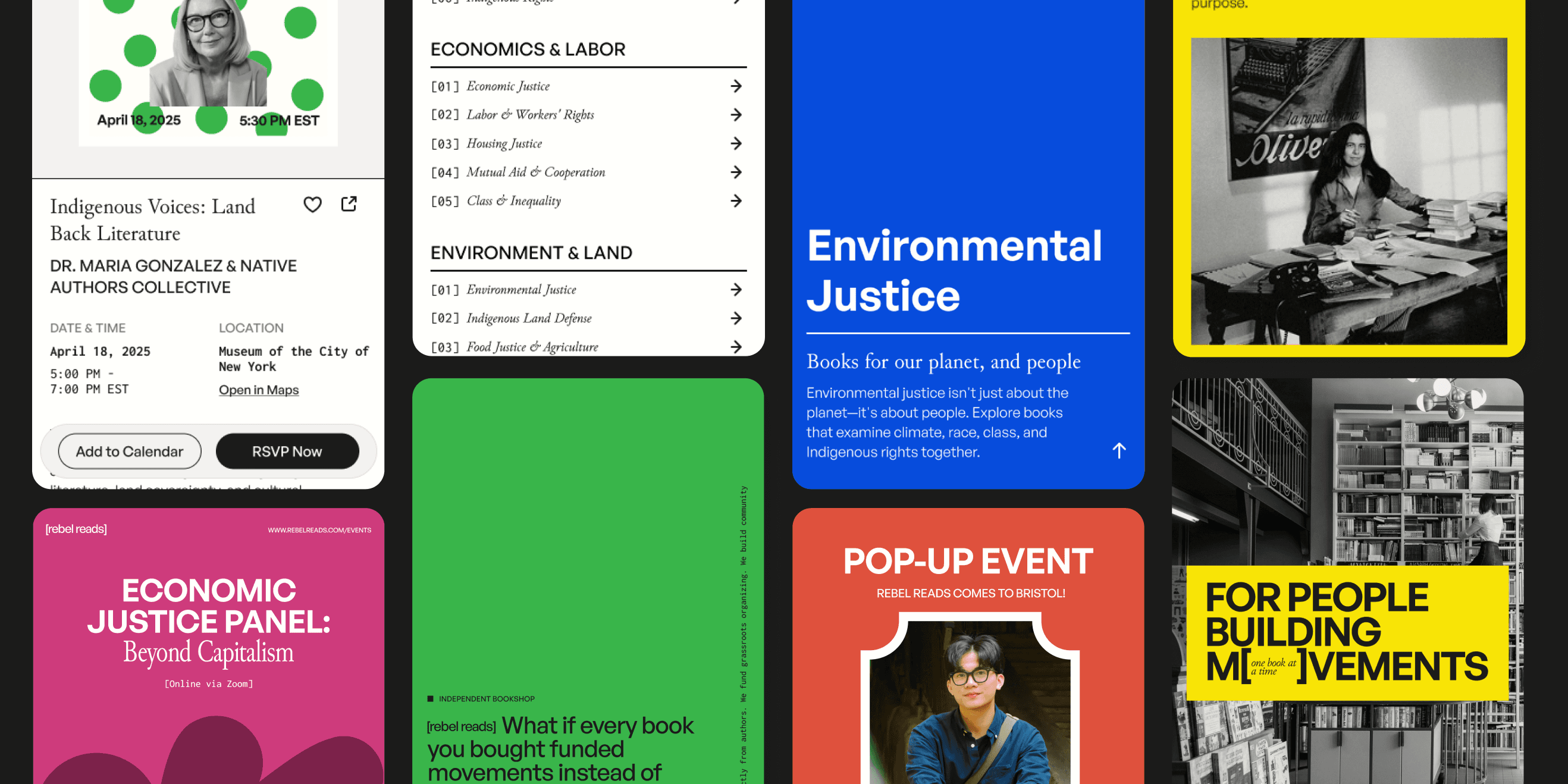
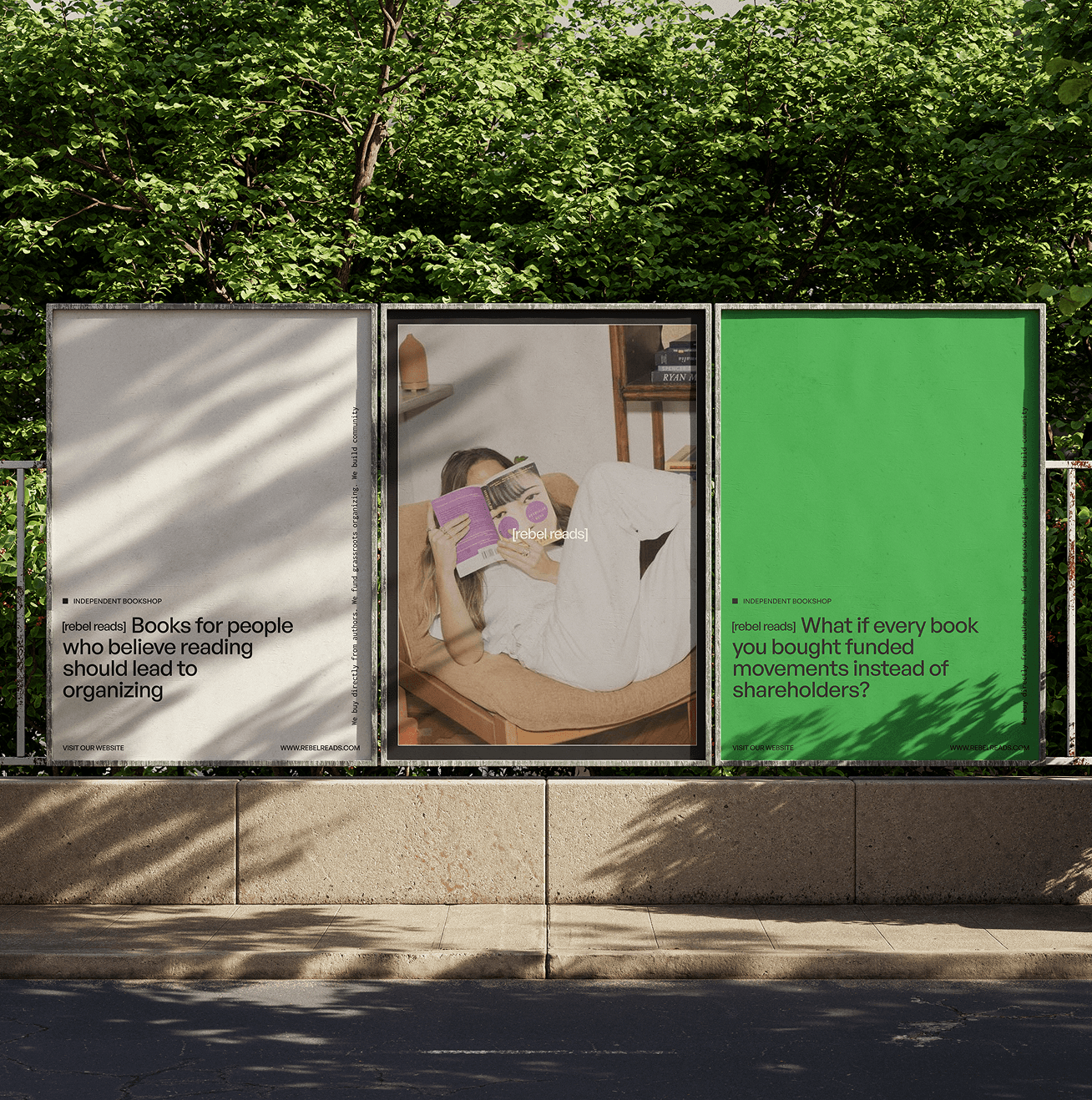
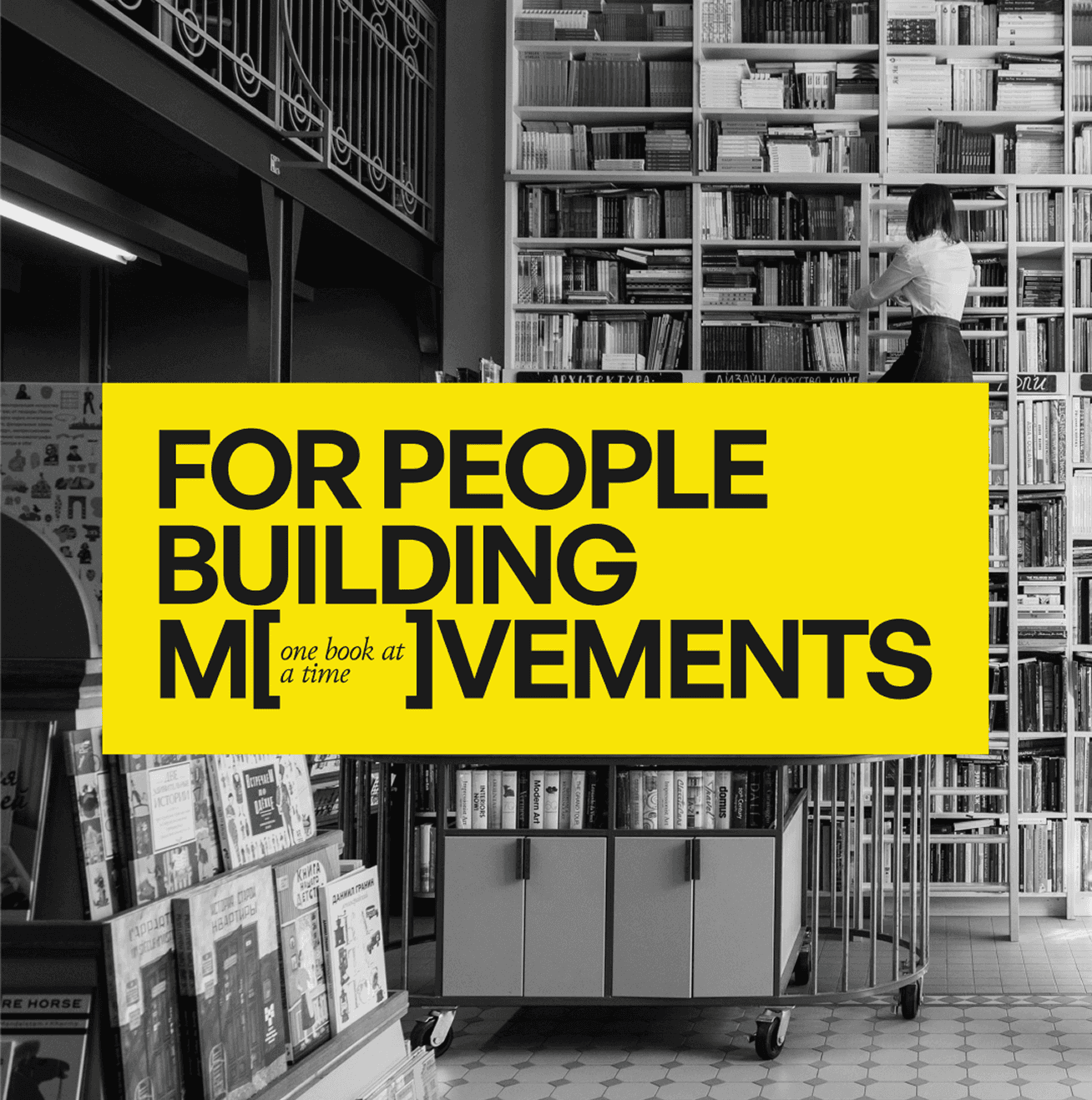
Rebel Reads needed to feel bold and editorial—celebrating activist literature without looking corporate—but still serious and trustworthy. I wanted personality and connection, not just another clean bookstore template.
What I designed:
Logo & Visual Elements — A bold, confident identity that feels intentional and mission-driven. Celebrates books and activism without being overly political.
Color System — Warm, approachable palette (not cold and corporate) maintaining accessibility standards. Each color serves specific purposes—cause categories, trust elements, action states.
Typography — Typography-forward design because book retail is about language. Editorial and literary without being pretentious—readable, confident, accessible.
Connecting Brand to Product — Everything translates consistently. The color system became component colors and cause tags. Typography hierarchy worked across marketing and interface. Visual warmth carried through social templates.
This is systems thinking: define what the brand represents visually, then connect it across every touchpoint—from logo to website to social posts.
What I Learned
01
Systems thinking connects everything
I learned that brand identity isn't separate from product design—they're one ecosystem. The color system I created for the brand became component colors and cause category tags. The typography hierarchy worked across marketing and interface. The visual patterns translated to social templates. When everything connects, the story feels cohesive and authentic.
02
Editorial voice helps people decide
I initially viewed "Why This Matters" as nice-to-have context. But editorial explanations actually help people decide faster. When you're looking at books about abolition, publisher descriptions all sound similar. Editorial context answers: "Is this the right book for me? Should I read this first? Does this center the right voices?" Context reduces decision paralysis and builds trust.
03
Define the sitemap earlier
If I could redo this project, I'd spend more time mapping the full site structure before jumping into visual design. I got excited about designing book pages and the homepage, but the navigation and how everything connected took longer to figure out. Clear information architecture from the start would have made the design process smoother.
Thanks for reading
If this case study resonates with how you think about design: research-driven, user-centered, and focused on real impact. I'd love to talk about opportunities with your team.